


Control Cables
What Is Control Cables
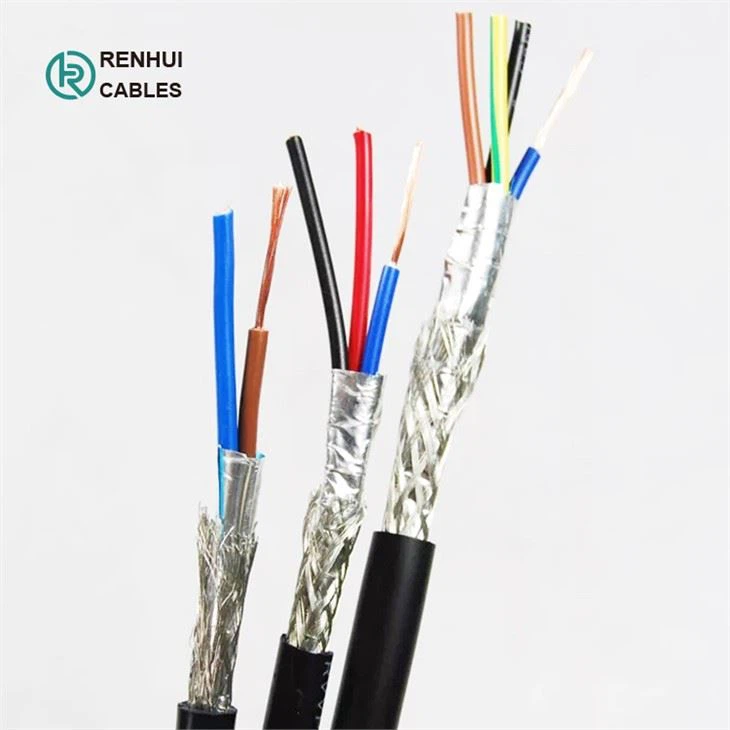
Control cables are multi-conductor cables used in automation and instrumentation applications. Control cables can measure and regulate transmissions of automated processes. Control cables are often UL rated. Control cables typically are shielded with a foil shield, braid shield or combination of the two.
Advantages of Control Cables
Excellent electrical performance
The cables are engineered to provide reliable electrical performance even in challenging industrial environments. They are able to handle increased voltages and currents, ensuring stable operation of connected equipment and machinery. The insulation and shielding techniques used in control cables minimize electromagnetic interference (EMI), which is critical to maintaining the integrity of sensitive signals and controls.
Withstand Harsh Environments
Industrial environments can be harsh, with exposure to chemicals, oils, extreme temperatures and moisture. Control cables are constructed from materials that can withstand these conditions, ensuring uninterrupted performance. Their resistance to such adverse conditions prevents degradation, ensuring that the cables continue to function optimally over time.
Improve Security And Compliance
In industrial environments, safety is paramount and control cables help create a safer working environment. They meet strict safety standards and certifications to resist cable damage, reduce electrical hazards, and protect personnel and equipment.
Versatility And Customization
Control cables are versatile and can be customized to meet the stringent requirements of industrial applications. They come in different sizes, conductor types, configurations and insulation materials to provide a tailor-made approach to the needs of each application.
-
 Control CableRated voltages U0/U: 450/750V. Application. For system connection wire of control, signal,Add to Inquiry
 -
 LiYCY PVC/TCWB/PVC Control CableLiYCY PVC/TCWB/PVC Control Cable are flexible multi-core flame retardant screened signal and dataAdd to Inquiry
 -
 KVVP KVVRP RVVP RVSP Control CablesKVVP KVVRP RVVP RVSP Control CablesLaying indoors, ducts, pipes, and other fixed shield caseAdd to Inquiry
 -
 Low Smoke Zero Halogen Control CableLow Smoke Zero Halogen (LSZH) cables for use in applications where smoke emission and toxic fumesAdd to Inquiry
 -
 KVV/KVVP/KVVP22/KVVP32/KVVRP CableKVV/KVVP/KVVP22/KVVP32/KVVRP Cable can be used for signal transmission between electronic devices,Add to Inquiry
 -
 LiYCY Tinned Copper Wire Screened Data CableLiYCY cable can be used for signal transmission between electronic devices, in computer systems orAdd to Inquiry
 -
 KVV KVV22 KVV32 KYJV KYJV22 KYJV32 Control CableKVV KVV22 KVV32 KYJV KYJV22 KYJV32 Control Cable. For system connection wire of control, signal,Add to Inquiry
 -
 Kvv/Kvvp/Kvvp2/Kvv22/Kvv32/Kvvr/Kvvrp Control CableKvv/Kvvp/Kvvp2/Kvv22/Kvv32/Kvvr/Kvvrp Control Cable. For system connection wire of control, signal,Add to Inquiry
 -
 LiYY CableFor signal and control cable in electronics of computer systems, electronic control equipment,Add to Inquiry
 -
 LiYCY CableLiYCY cable can be used for signal transmission between electronic devices, in computer systems orAdd to Inquiry
 -
 LiYY Flexible Control Data CableFor signal and control cable in electronics of computer systems, electronic control equipment,Add to Inquiry
 -
 FG7R FG7OR Control CableFlame retardant, LSZH power, control and signalling cables,insulated in type G7 elastomericAdd to Inquiry


- Tel: +8615006408062
- Email: cable@renhuicable.com
- Add: Building M7, Jingdong Digital Economy Industrial Park, Cuizhai Street, Start-up Area, Jinan City, Shandong Province, China.
Why Choose Us
Our Company
Our Company
Shandong Renhui Cable Co., Ltd. is founded in 2010, located in Jinan city,Shandong Province, China. The company covers an area of 50 thousand square meters, registered fund of RMB 5 million, has 100 staff and workers. We are a professional cable manufacturer in China.
Our Products
Our products mainly cover low and medium voltage cable, PVC insulated cable, XLPE insulated cable, control cable, communication cable, rubber cable, mine cable, welding cable, ship cable, aerial bundled cable and other related customized cables. These cables are used in Power metallurgy, Oil&Chemical Industry, Power Station, Mine, Port and Architectural Engineering, and other fields.
Sales Market
The products have been sold to many countries and regions in the world, such as Russia, Algeria, Bahrain, Bangladesh, Brazil, Chile, Cyprus, Indonesia, Iran, Malaysia, Oman, Dubai, Pakistan, Philippines, Singapore, Sri Lanka, Tanzania, Yemen, Kenya, Vietnam, Mongolia.
What You Must Know About the Applications of Control Cables
When setting up an electronic, electrical, or automated system, a control cable is the most common component you will likely come across. Control cables are multi-conductor cables utilised in automation and instrumentation applications. They are the primary part of the system, which must be selected after thorough deliberations and in-depth analysis only.
Considered a prominent member of the instrumentation cable catalogue, control cables are suitable for transmitting voltage and data. They can measure and manage the transmissions of automated processes and are often specially engineered for centralised control of electrical equipment and various automatic and wire control commands. Read for more details about control cables, particularly their applications and uses.


Understanding Control Cables
Control cables are multi-conductor cables considered the lifeline of automation, instrumentation, and other similar applications. The UL-rated control cables are ordinarily covered in polyurethane or polyvinyl chloride sheaths. These cables are usually designed to have enough flexibility to enable convenient cabling and route anywhere.
Most control cables are protected with a braided shield, foil shield, or a combination of both. Automated systems often require flexible control cables suitable for various installation and construction scenarios. The flexibility of a control cable will also guarantee the system's faultless functioning.
Applications Of Control Cables
Control cables are utilised in various applications in the automation and instrumentation industries. However, to receive an error-free and efficient performance throughout, you need to analyse the control cables and select one with technically superior specifications. Here are the major applications where control cables can be used:
Automated Systems
Electrical systems with numerous functionalities
Systems that provide the control, monitoring, measurement, and regulation of technical components and devices
Systems that are installed with several inputs and outputs
Power distribution sectors
Specific Areas Where Control Cables Are Used
The enormous variety of control cables makes them suitable for various fields. The use of braid-shielded, foil-shielded, woven, and flat control cables are usually based on their areas of applications. Like their applications, there are also several different areas where control cables are ideal. Here are the significant areas where control cables are suitable:
Automated systems
Production centres
Robotic technology field
Assembly lines
Power distribution area
Technical Specification Of Control Cables
The technical specifications of control cables depend on their application and area of use. With that said, the most common technical specifications of control cables are 300 volts to 600 volts for voltage, up to 900 degree Celsius for temperature limits, and from 28 AWG to 2 AWG for gauge. Ultimately, you can choose the specifications of a control cable per your commercial and industrial needs.

Cables are divided into power cables, control cables, signal cables. Control cables belong to electrical equipment cables, with power cables are two of the five major categories of cables. While Control cables are specially designed for the centralized control of electrical equipment and a spread of automatic and wire control command negative feedback circuit cables.
While Control cable is suitable for industrial and mining enterprises, energy transportation sector, for the exchange of rated voltage 450/750 volts below the control, protection lines and other occasions utilized in PVC insulated PVC sheathed control cables. The cable is essentially an interconnecting one which is installed within the middle of something most of the days .
There are many sorts of control cables which are all unique in their own way. the most sorts of control cables are there in total, which are inclusive of CY, SY and YY cables. All the cables play a big part in conductivity within the automation field. The control cable basically features a voltage of 300/500. The sheath of the control cables is transparent which allows people to means possible damage anytime without having to face any problem.
The main element of the control cable is conductive cores, which are made of copper. The conductive core is most often made in the form of a single wire, or formed by a large number of thin wires to create flexible properties for the entire cable. Single conductors are used for cables connected for stationary devices, where bending, twisting and dynamic loads of the cable are not expected.
For mobile, mobile electrical installations, conductive conductors are made flexible, in the form of twisted wires. The cores, made of several copper wires, are tin-plated or used uncoated. Equipment of high voltage substations over 220 kilovolts may only be connected with copper cables and conductors. Aluminum does not provide sufficient cable reliability for high voltage equipment, and is prohibited from use.
The cross-sectional area of copper conductors has its own standards and is in the range of 0.75-10 mm2. Thinner cores are used in low-power telecontrol, communication and other circuits that do not generate increased signal power. For precision measurement systems that have a high sensitivity to voltage drop, large cross-sectional conductor diameters are used.
The conductors are necessarily covered with insulation that does not allow current leaks and short circuits. The dielectric layer must have sufficient dielectric strength, preventing its breakdown at high operating voltage, and depends on the cross-section of the core. The thicker the core, the larger the insulation layer. The insulated conductors are bundled together and twisted with a certain number of turns to allow slight bending of the cable.

How Control Cables Are Constructed
While there are different types of control cables, most of them feature a similar construction. They consist of seven individual bundles of wire. In the center of a control cable is a single wire bundle, which is surrounded by six other wire bundles.
Most types of control cables are made of steel. With that said, some of them are made of carbon steel, whereas others are made of stainless steel. Carbon steel control cables are stronger, but they lack the corrosion-resistant properties of stainless steel. Regardless of the material, control cables are already strong because they are constructed of multiple bundles of wire.

Even if you've seen them, you might not know how control cables work. Control cables use a simple method of operation. They work by connecting control instruments - or other parts for that matter - to flight control systems.
Many control instruments are connected to flight control systems via a control cable. Moving or otherwise engaging a control instrument may pull a control cable that's connected to a flight control system.
Control cables can wear down over time. They are exposed to physical stress, heat, and in some cases, chemicals like oil. Fortunately, they are designed to withstand these elements. But even with their durable design, control cables should be regularly inspected for signs of damage. If a control cable has any broken or frayed wire strands, it should be replaced.
How To Choose And Use a Control Cables
The wires connected from the control center to various systems to transmit signals or control operating functions are collectively called control lines. The functions of early control wires were relatively simple, including indicator light display, instrument description, operation of relays and switch cabinets, alarm interlock systems, etc. Due to their widespread use, high requirements were placed on control wires. Weak current and computer networks. When choosing wires, we usually need to consider the following factors.
Application: Power cable, overhead cable, control wire, etc.
Laying conditions: General plastic insulated cable, steel armored cable, steel wire armored cable, corrosion-resistant cable, etc.
Safety requirements: We can choose non-flame retardant cables, flame retardant cables, halogen-free flame retardant cables, fire retardant cables, etc.
When We Talk About How To Use Control Wires, We Also Should Consider The Below Points
For PVC insulating sheath electric wire, it is suitable for fixed installation in places with high requirements for mechanical protection and moisture resistance and can be placed openly or hidden.
For single core PVC electric wire, it is suitable for house wiring cable, and also suitable for indoor use.
The installation environment temperature is not lower than -15℃. Suitable for light and medium mobile equipment, instrumentation, household equipment, power lighting, and other places where softness is required.
Power cables are cables, which transfer both high energy and low energy from the source to the equipments. Specifically designed to best suit active and neutral environment, these cables bear a thick outer sheath compared to ordinary Control cables. The external sheath of the Power cables with its immense strength and protection enables the cables to transfer high volume of energy without any tension or strain.
Unlike Control cables, Power cables often have a unique colour code system that distinguishes the high voltage carriers from their low voltage counterparts. Control cables offer superior resistance to interference, which makes them ideal for sending low voltage signals and power cables are equipped to transfer energy.
Control cables send signals to control the functionality of the device. These cables are part of a family of instrument cables that distribute low voltage data or signals. Designed for automation control, these cables have copper conductors wrapped in a galvanized steel braid. These cables are typically used in areas with current demands of less than 1 amp and can carry signals up to 40 volts. These cables often come with PVC insulation that protects them from impact and harsh weather conditions.
Understanding The Importance Of Control Cables In Industrial Automation
Control cables are electrical cables that are specifically designed for transmitting signals or data between different components in industrial automation systems. These cables are used to control and operate various machines and equipment, including sensors, actuators, motors, and other devices, that are integral parts of automated processes.
Control cables play a critical role in industrial automation systems, as they are responsible for transmitting signals and data between different components. Without control cables, it would be impossible to control and operate machines and equipment in an automated environment, leading to reduced efficiency, productivity, and increased downtime.
Control cables play a crucial role in transmitting data and signals between different components in industrial automation systems. They are essential for controlling and operating machines, equipment, and devices in automated environments, enabling real-time communication and control.
Control cables are used in various types of automation systems, including factory automation, process automation, and building automation. In factory automation, control cables are used to control and operate machinery, assembly lines, and material handling systems. In process automation, they are used in chemical processing plants, refineries, and other industrial applications. In building automation, they are used to control lighting, HVAC systems, and security systems. Overall, control cables are essential components in industrial automation systems, providing reliable and efficient communication and control between different components.
Selecting the right control cable for an industrial automation system is crucial to ensure its reliable and efficient operation. There are several factors to consider when selecting control cables, including environmental factors, electrical characteristics, and mechanical properties.
Environmental factors to consider include temperature range, moisture exposure, and exposure to chemicals or other corrosive substances. Electrical characteristics such as voltage rating, current capacity, and impedance also play a significant role in selecting the appropriate control cable. The mechanical properties of the cable, such as flexibility and durability, also need to be considered, as they can affect the cable's performance and longevity.
Maintaining and troubleshooting control cables is essential to ensure their reliable and efficient operation. Common issues that can affect the performance of control cables include damage to the insulation, corrosion, and mechanical stress. Over time, these issues can lead to signal degradation, intermittent faults, and system failures.
To maintain control cables, regular inspections, cleaning, and protection are necessary. Inspections can help identify any signs of wear, corrosion, or damage to the cable, while cleaning can help remove any contaminants that may affect the cable's performance. Protecting the cables from harsh environments, such as exposure to chemicals or extreme temperatures, is also essential to prevent damage.
When problems arise with control cables, troubleshooting techniques can help identify and resolve them quickly. Techniques such as continuity testing, insulation resistance testing, and visual inspections can help locate faults and determine the extent of any damage. By addressing issues promptly, it is possible to avoid costly downtime and ensure that automation systems operate reliably and efficiently.
Control cables are a type of electrical cable that are used to transmit signals and data between control systems (eg sensors, PLC, VSD) and the equipment they control (eg. Motor, Pneumatic cylinder). They are typically used in industrial and automation applications, where precise and reliable control of machinery and processes is required.
Control cables can come in various types, depending on their specific application and the type of signal they carry. Some common types of control cables include:
Instrumentation Cables: These are used to transmit low-level analog signals, such as temperature, pressure, or flow measurements. They typically have a shielded design to reduce interference.
Control And Power Cables: These are used to transmit both control signals and power to machines and equipment. They may have separate conductors for power and control signals or combined conductors.
Ethernet Cables: These are used to transmit digital signals for networking and communication purposes, such as connecting industrial controllers or sensors to a network.
Coaxial Cables: These are used to transmit high-frequency signals, such as video or radio signals. They have a coaxial design with a central conductor surrounded by a shield.
Control cables are typically made of copper or aluminum conductors, with various insulation and shielding materials depending on the specific application. They may also have additional features, such as armour and /or moisture-resistant jackets, to protect against environmental factors such as abrasion, impact, or moisture.
Proper installation and maintenance of control cables are essential for their performance and reliability. This includes careful routing and securing of cables to prevent damage, regular inspection for signs of wear or damage, and testing for proper signal transmission.
The strength of a signal in a control cable depends on various factors, such as the type of signal being transmitted, the length of the cable, and the quality of the cable and its connectors.
For analog signals, eg temperature, pressure, and flow ranges, the strength of the signal is usually measured in terms of amplitude and frequency. The strength of the signal can be affected by various factors:
The resistance of the cable, (use of copper is highly recommended here )
The capacitance.
The inductance of the cable.
The quality of the shielding.
To maintain the strength of the signal, it is important to use a cable with low resistance, low capacitance and inductance, and good shielding.
For digital signals, eg motor start, the signal is usually measured in volts or millivolts. The strength of the signal can be affected by factors such as the quality of the cable, the distance the signal needs to travel, and the type of connectors used. To maintain the strength of the signal, it is important to use a cable with good impedance matching, low attenuation, and good noise immunity.
Some More Information On Types Of Signals
From the brief understanding regarding signals both analog and digital, it is clear that both rely on voltage and current for accuracy. The strength of the signal can also be affected by interference from external sources, such as electromagnetic interference (EMI) and radio frequency interference (RFI). To minimize the effects of interference, it is important to use a cable with good shielding and to properly ground the cable.
To ensure the strength of the signal in a control cable, it is important to properly design, install, and maintain the cable system. This includes using high-quality cables, connectors, and other components, as well as proper grounding and routing of the cables to minimize the effects of interference. Regular testing and inspection of the cables can also help to identify and address any issues with signal strength.
It is important to keep in mind Faraday's Laws of Electromagnetic fields (EM fields) when designing power control systems and especially when routing cables. EMIs can be produced by a wide variety of sources, including electric currents flowing through cables. When electric current flows through a cable, it generates a magnetic field around the cable.
The strength of the magnetic field depends on the amount of current flowing through the cable, the distance from the cable, and the geometry of the cable. Magnetic fields generated by current-carrying cables can be measured using specialized instruments such as Gauss meters.
In addition to generating EM fields, current flowing through cables can also be affected by existing EM fields. This is because EM fields can induce currents in nearby conductive materials, including cables. This phenomenon is known as electromagnetic interference (EMI) and can cause a range of problems in electronic systems, such as signal degradation or even equipment failure.
To minimize the effects of EMI, cables can be shielded with materials such as copper or aluminum. The shield acts as a barrier between the cable and the surrounding EM fields, reducing the amount of interference that is induced in the cable. Additionally, cables can be routed away from sources of EM fields, such as power lines or electronic equipment, to further reduce the risk of interference.
Electromagnetic interference (EMI) can have a range of effects on power systems, particularly on sensitive electronic equipment. Some of the effects of EMI on power systems include:
Voltage Fluctuations: EMI can cause voltage fluctuations, which can lead to power quality issues such as flickering lights or equipment malfunction.
Equipment Malfunction: EMI can cause electronic equipment to malfunction or fail completely. This can be a serious problem for critical systems such as medical equipment, aviation systems, or industrial control systems.
Data Corruption: EMI can cause errors or corruption in data transmitted over electronic communication systems, such as wireless networks or Ethernet connections.
Communication Interference: EMI can interfere with wireless communication systems, such as radio or television signals, or disrupt communication between different electronic devices.
Safety Hazards: EMI can also create safety hazards, particularly in high-voltage power systems. For example, EMI-induced voltage spikes can damage equipment or cause electrical arcs, which can create a fire hazard or pose a risk to personnel working nearby.
To mitigate the effects of EMI in power systems, various measures can be taken, such as shielding, grounding, and using filters or surge suppressors. It's important to ensure that all equipment is properly installed and grounded and to conduct regular maintenance and testing to identify and address any EMI-related issues.
Our Factory
Shandong Renhui Cable Co., Ltd. is founded in 2010, We are a professional cable manufacturer in China. Our products mainly cover low and medium voltage cable, PVC insulated cable, XLPE insulated cable, control cable, communication cable, rubber cable, mine cable, welding cable, ship cable, aerial bundled cable and other related customized cables. These cables are used in Power metallurgy, Oil&Chemical Industry, Power Station, Mine, Port and Architectural Engineering, and other fields.

FAQ
We're well-known as one of the leading control cables manufacturers and suppliers in China. If you're going to buy high quality control cables with competitive price, welcome to get more information from our factory.
pvc insulated control cable, , braided control cables