


Rubber Cable
What Is Rubber Cable
Tough Rubber Cable is a type of cable which normally consists of a black outer sheath of rubber with several conductors inside. The rubber provides an abrasion-resistant, corrosion-resistant, waterproof, protective covering for an insulated electric cable. A typical rubber sheath cable.
Advantages of Rubber Cable
Electrical Characteristics
Rubber cables have excellent electrical properties, including high dielectric strength and insulation resistance. This quality ensures efficient transmission of electrical signals and minimizes the risk of leakage or breakdown, making it suitable for use in power distribution, mechanical and electrical equipment.
Shock And Vibration Resistance
The inherent flexibility and robustness of rubber insulation enable cables to effectively absorb shock and vibration. This feature is beneficial in applications where equipment or machinery is frequently moved, reducing the risk of cable damage or disconnection.
Flame Retardancy And Safety
Rubber cables have flame retardant properties that can inhibit the spread of fire and minimize the release of toxic gases in the event of a fire. This feature enhances security in critical applications such as power distribution, industrial equipment and transportation.
Easy Termination And Installation
Rubber cable is generally easier to terminate and install due to its flexibility and flexibility. This easy installation saves time and labor costs, making it the first choice across a variety of industries.
Temperature Tolerance
Rubber insulation has good thermal stability and can withstand a wide range of temperatures from extremely cold to high temperatures. This thermal resistance ensures cable performance and reliability even in environments with temperature fluctuations or extreme conditions common in industrial environments.
Compatibility
Rubber cables are widely used in a variety of applications including power generation, industrial machinery, transportation, mining, oil and gas, renewable energy, and more. Their versatility and adaptability make them suitable for a wide range of industries and applications.
-
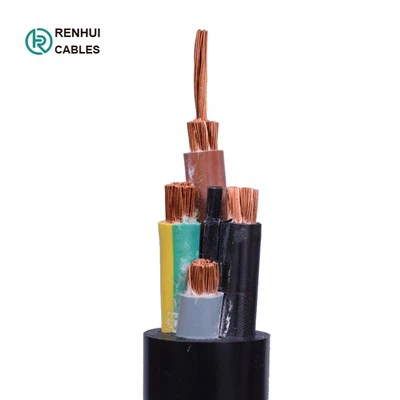 Rubber CablesRubber Cables. Rubber Insulated and Rubber sheathed flexible cables . Voltage Rating: 450/750V .Add to Inquiry
 -
 300/500V H05RR-F CableLightweight rubber hose for connection of electrical appliances at low to medium mechanical stressAdd to Inquiry
 -
 300/500V H05RR -F Rubber Industrial CableLightweight rubber hose for connection of electrical appliances at low to medium mechanical stressAdd to Inquiry
 -
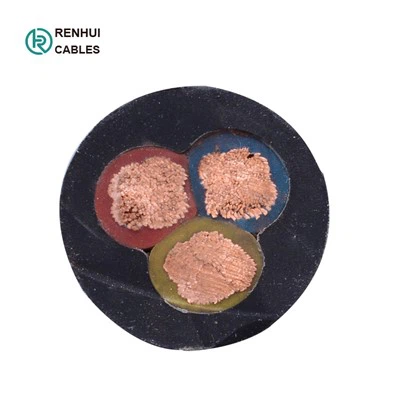 H05RR-F 3X1.0mm2 3X1.5mm2 4X1.5mm2 4X2.5mm2 Rubber CableLightweight rubber hose for connection of electrical appliances at low to medium mechanical stressAdd to Inquiry
 -
 Welding CableThis product is suitable for the welding machine whose voltage to the ground is not more than 200VAdd to Inquiry
 -
 Rubber Flexible CableThis cable is primarily used in all kinds of electrical equipment, such as the mobile power ofAdd to Inquiry
 -
 IEC 60245 Rubber CablesApplications include handling equipment, mobile power supplies, worksites, stage and audio visualAdd to Inquiry
 -
 H07RN-F Rubber CablesThese cables are designed to provide high flexibility and have the capacity to withstand weather,Add to Inquiry
 -
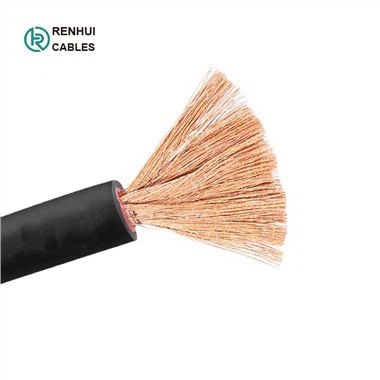 H01N2-D CablesIn dry, damp and wet rooms as welding cable for machine or hand operation.Add to Inquiry


- Tel: +8615006408062
- Email: cable@renhuicable.com
- Add: Building M7, Jingdong Digital Economy Industrial Park, Cuizhai Street, Start-up Area, Jinan City, Shandong Province, China.
Why Choose Us
Our Company
Our Company
Shandong Renhui Cable Co., Ltd. is founded in 2010, located in Jinan city,Shandong Province, China. The company covers an area of 50 thousand square meters, registered fund of RMB 5 million, has 100 staff and workers. We are a professional cable manufacturer in China.
Our Products
Our products mainly cover low and medium voltage cable, PVC insulated cable, XLPE insulated cable, control cable, communication cable, rubber cable, mine cable, welding cable, ship cable, aerial bundled cable and other related customized cables. These cables are used in Power metallurgy, Oil&Chemical Industry, Power Station, Mine, Port and Architectural Engineering, and other fields.
Sales Market
The products have been sold to many countries and regions in the world, such as Russia, Algeria, Bahrain, Bangladesh, Brazil, Chile, Cyprus, Indonesia, Iran, Malaysia, Oman, Dubai, Pakistan, Philippines, Singapore, Sri Lanka, Tanzania, Yemen, Kenya, Vietnam, Mongolia.
Applications of Rubber Cables
Rubber cables find a multitude of applications across various industries due to their unique characteristics and versatility. Some prominent applications include:


Industrial Machinery
Rubber cables are extensively used in industrial settings to power and control machinery. Their flexibility and resistance to oils and chemicals make them well-suited for dynamic and demanding manufacturing environments.
Construction Sites
Construction sites pose challenging conditions, including rough handling and exposure to the elements. Rubber cables, especially types like neoprene, are widely employed in construction for their durability and ability to withstand harsh environments.
Power Distribution Systems
In power distribution systems, where reliable and efficient electricity transfer is paramount, rubber cables, such as those with Ethylene Propylene Rubber (EPR), are commonly utilized. They provide a dependable solution even under high temperatures.
Outdoor Installations
Rubber cables with weather-resistant properties, like butyl rubber cables, are ideal for outdoor applications. They endure exposure to sunlight, moisture, and other environmental factors, making them suitable for installations in outdoor lighting, signage, and other similar settings.
Household Appliances
Silicone rubber cables are commonly used in household appliances, providing a safe and flexible wiring solution. They are well-suited for applications in irons, kettles, and other devices where high-temperature resistance and flexibility are crucial.
Automotive Industry
In the automotive sector, rubber cables play a crucial role in providing reliable wiring solutions. Their flexibility and resistance to oils and chemicals make them suitable for use in vehicles, including powering lights, sensors, and other electrical components.
Heating Elements
Silicone rubber cables, with their excellent temperature tolerance, are often employed in heating elements. This includes applications in ovens, heaters, and other devices where exposure to high temperatures is a constant factor.
Medical Equipment
The flexibility and durability of rubber cables make them suitable for use in medical equipment where precise and reliable electrical connections are essential. They are employed in various diagnostic and therapeutic devices within the healthcare industry.
Types of Rubber Cables
Neoprene Cables
Neoprene rubber cables are known for their excellent resistance to oils, chemicals, and extreme temperatures.They find applications in industries where flexibility and resistance to harsh conditions are crucial, such as in manufacturing and construction.
Ethylene Propylene Rubber (EPR) Cables
EPR rubber cables are prized for their high dielectric strength and thermal resistance.Commonly used in power distribution systems and electrical installations where reliable performance under high temperatures is essential.

Butyl Rubber Cables
Butyl rubber offers exceptional weather and ozone resistance.These cables are often utilized in outdoor applications where exposure to sunlight and weather elements is unavoidable.
Silicone Rubber Cables
Known for their wide temperature tolerance and flexibility, silicone rubber cables are popular in both industrial and household applications.Commonly used in appliances, heating elements, and other high-temperature environments.
Why Use Rubber Cables
Rubber Cables is the use of rubber as the insulation material of the cable, which can withstand a higher load, in the power system, machinery, steel, and other fields widely used. If you want to know more about the characteristics, uses, and considerations of flexible rubber cables, or you are currently struggling to choose rubber wire, this article will answer these questions.
That typical rubber cables are made of various rubber materials as protective covers for cables. Early rubber materials used natural rubber, but there has been large-scale use of a variety of synthetic rubber, including styrene-butadiene rubber, ethylene propylene rubber, butyl rubber, etc., to increase the oil resistance, cold resistance, heat resistance, and other characteristics, improve the performance of the cable.
Rubber is a thermosetting plastic elastomer that reaches an elastomer after being vulcanized or cross-linked and will not melt when reheated. At low temperatures, it will not become hard and cannot be stretched out. Rubber cable grommets prevent cables and pipes from being damaged by the external environment and ensure the normal operation of devices.
Waterproof cables can prevent water from entering the cable and causing a dangerous short circuit. Waterproof rubber cable Waterproof structure and waterproof materials effectively increase the waterproof and moisture resistance of the cable. Underwater motors, submersible pumps, and others that need to work underwater or in a wet environment can use flexible rubber cable, rubber material is a kind of insulation material and is waterproof, effectively ensuring the cable's electrical performance. The pump cable can also be specially selected, which can generally be used for the power transmission of the motor below 500V, and has excellent water resistance and softness to ensure the power transmission and electrical signal transmission inside the pump motor.
Mobile universal rubber cable suitable for general household appliances, power tools, and mechanical equipment. Light mobile rubber wire voltage is generally 220V, used in daily electrical equipment. Industrial electrical equipment usually uses medium or heavy-moving rubber cover wires. YQ light has excellent flexibility and generally does not bear additional external forces. The YZ medium has sufficient flexibility and can withstand normal mechanical forces. YC heavy duty can withstand a greater external force, its sheath has enough elasticity and mechanical strength, and there is a certain flexibility to ensure bending.
If you need to connect the welding machine to the tool, you can choose a rubber welding cable, which can carry a high current. Generally made of a multi-strand copper core plus rubber insulating material, it has good heat resistance and oil resistance. When in use, the appropriate section size should be selected according to the size of the current to ensure that the insulation layer will not be burned due to overheating.
Rubber cable has the advantages of soft, flexible, acid resistance, oil resistance, and high and low-temperature resistance, but poor wear resistance, weak tear resistance, and easy oxidation, but the price is higher. In contrast, PVC cables are not resistant to high temperatures and are easy to soften in high-temperature environments, increasing the risk. Therefore, PVC cable is generally used in cable laying, and its oxidation resistance is better than rubber wire.
Before using the rubber cable, it is necessary to pay attention to its rated voltage, rated current, and other related parameters to avoid safety hazards caused by overload use. Avoid contact with high-temperature equipment during installation, minimize telecommunication connectors, and install protectors.

Material Is Different
PVC insulated flexible copper wire includes multistrand copper, covering a layer of insulation material, this insulation material prevents contact with electrical conductors. Inner conductors usually include ofc copper and tinned copper.
Rubber-sheathed flexible cable belongs to a kind of double insulation wire. The outer sheath and insulation use rubber material, and the conductor is ofc copper.
Application Is Different
The weather-resistant rubber flex cable is suitable for power devices with AC rated voltage of 300V/500V and 450/750V and below, household appliances, electric tools, construction lighting, and machine interiors, etc., where softness or movement is required, as electrical connecting wires or wiring.
PVC wires are mainly used for internal connections of electronic and electrical equipment.
The Cost Is Different
Since rubber material cost is higher than PVC material, the price of the rubber insulated wire is also higher than the PVC insulated industrial cables.
Characteristic Is Different
The surface of PVC insulated copper wire is smooth, the fluid resistance is small, no scaling, and it is not suitable for breeding microorganisms. Small coefficient of thermal expansion, no shrinkage deformation.
Rubber flexible cable has certain weather resistance and oil resistance, can withstand a large mechanical external force, is soft, has good elasticity, cold resistance, ultraviolet resistance, good flexibility, and high strength.
Manufacturing Of Rubberized Cables
A copper cable consists of two or more copper wires running side by side and bonded.Twisted or braided together to form a single asssembly. We also know that electrical cables may be made more flexible by stranding the wires.
Manufacturing of rubberized cables can be done either in four stages.
a) Drawing of metallic wire
b) Mixing of insulated compound and seath compound.
c) Rubberized coating on metallic wire by extrusion process
d) Vulcanization of cable.
Alternatively it can also be done in three stages from b to d with the metallic wire in the shop floor.
High quality and perfromance of cables are basically due to use of standard elastomers like CR,EPDM,CSM,EPM,SBR,NR,etc.Several properties of seath compounds are described depending on its uses.But most important part is compound should be processed easily an with out any difficulties in processing in mixing mill or in extrusion.
Larger volume of rubber compound could be mixed in intermix or banbury. However use of two roll mill and kneader are also popular.Internal mixing is preferred because of faster productivity with good dispersion.Insulation of electrical failure due to any unwanted agglomerates and contamination.Both cold feed extruder and hot feed extruders are in use.
Both insulation compound could be extruded in different cross head extrusion and the unvulcanized cables could be coiled in trays or in reels either for batch curing and continuous curing.
Extruder in the industry where the metallic conductor is axially passed through the extruder and the insulatin compound is coated first over which the seath compound coated and passed directly in vulcanizing tube for continuous vulcanization.
Advantages Of Rubber Cable Protectors
There Are The Following Advantages Of Using Rubber Wire Covers:
Environmentally Friendly
A rubber cord cover or cable cover is mainly made of 100% recyclable material, making it eco-friendly. On the other hand, other wire cover materials have different chemicals that are not as good and safe for our environment.
Easy To Install
Rubber cable protectors are flexible, and a single person can easily carry them and insert an electrical cable, power cable, data cable, Ethernet cable, network cable, and home cable. Their cover and base can be managed without any trouble.
Suitable For Both Indoor And Outdoor Settings
Rubber cable protectors are available in two forms - heavy-duty and light-duty cable protectors. The light-duty cable ramps are a good choice for indoor areas where foot traffic is low to medium. In contrast, heavy-duty cable covers are a good choice for areas with a high pedestrian number.
Cost-Effective Option
Since rubber cable protectors are made of reusable and recyclable material, they are cost-effective compared to other cable covers. It is an excellent investment that can help people save money in the long run.
Highly Visible
Covers can be made in bright colours such as yellow, etc. Therefore, rubber cable covers offer high visibility even in dark areas. It reduces the chances of tripping, slipping, or falling.
Flexible Yet Rigid
Rubber is a hard material, but it still offers flexibility. This makes it durable and lasting. You can mould its different parts while inserting cables or interlocking different units.
To make an informed choice between rubber and PVC cables, a number of elements must be taken into account. The following are some important things to remember:
Environmental Conditions: Examine the circumstances around the utilization of the wires. Rubber electrical cable are frequently a better option if the environment includes exposure to high temperatures, abrasions, chemicals, oils, or outside elements. Conversely, PVC cables are appropriate for uses in which there is less exposure to adverse environments.
Flexibility And Movement: Rubber cables provide superior flexibility and durability, withstanding continual bending and stretching, if the application includes constant movement, as in the case of robots or construction gear. PVC cables work well in settings where there is little movement.
Cost: Evaluate the financial constraints and contrast the price of PVC and rubber coated electrical cable. PVC cables are favored in applications where cost is a factor since they are often less expensive than rubber cables.
The Benefits of Using Rubber Cables in Electrical Installations
Using rubber cables in electrical installations offers several benefits. Firstly, rubber is a highly durable and flexible material, making it ideal for use in environments where cables may need to withstand harsh conditions or constant movement. Rubber cables are also resistant to oil, water, and chemicals, ensuring their longevity and reliability. rubber cables have excellent heat resistance properties, making them safe and suitable for high-temperature applications.
Rubber Cables Offer Several Advantages When Used In Electrical Installations:
Flexibility: Rubber cables are known for their high flexibility, making them easy to maneuver and install in various settings. This flexibility allows them to be bent and twisted without causing damage or affecting their performance, making them suitable for both indoor and outdoor installations.
Durability: Rubber cables are highly resistant to mechanical stress, such as pulling, bending, and twisting. They can withstand harsh environments and extreme temperatures, including exposure to sunlight, oil, chemicals, and water. This durability ensures a longer lifespan and reduces the need for frequent replacements.
Electrical Insulation: Rubber is an excellent electrical insulator. Rubber cables provide good insulation properties that help prevent electrical current leakage, short circuits, and electrical shocks. This makes them safe for use in a wide range of applications, including residential, commercial, and industrial settings.
Resistance To Abrasion And Damage: Rubber cables have a high resistance to abrasion, which means they can withstand rough handling and environmental conditions without getting damaged easily. This makes them suitable for installations where the cables may come into contact with sharp edges or rough surfaces.
Resistance To Fire: Rubber cables are often manufactured with fire-resistant properties, which means they have a high ignition point and release minimal toxic smoke and fumes during a fire. This makes them a safer option in areas where fire safety is a concern, such as public buildings, hospitals, and industrial facilities.
Cost-Effective: Although rubber cables may have a slightly higher upfront cost compared to other cable types, their durability and long lifespan make them a cost-effective choice in the long run. Their resistance to damage and wear results in fewer replacements and maintenance requirements, reducing overall operational costs.
What Maintenance Is Required For Rubber Cables
Rubber cables are widely used in various industries because of their flexibility, durability and resistance to harsh environments. Like any other equipment, rubber cables require proper maintenance to ensure optimal performance and use. Maintenance practices required for rubber cables include inspection, cleaning, storage, and handling procedures.
Regular inspection of rubber cable is essential to identify any signs of wear, damage, or degradation. Inspect the cables visually for cuts, abrasions, cracks, or exposed wires. Pay attention to areas where the cable bends or flexes frequently, as these are more prone to damage. Check for signs of overheating, such as discoloration or melting insulation. Inspections should be conducted at predetermined intervals, depending on the usage and environmental conditions.
Keeping rubber cable clean is crucial for maintaining their integrity and performance. Remove any dirt, grease, or debris from the cables using a soft brush or cloth. Avoid using harsh chemicals or solvents that may damage the rubber insulation.Use a mild soap solution and rinse thoroughly with clean water. Ensure that the cables are completely dry before putting them back into service to prevent moisture-related issues.
Rubber cable are often exposed to various environmental factors that can accelerate deterioration. Protect the cables from direct sunlight, extreme temperatures, moisture, and chemicals whenever possible. Use cable trays, conduits, or protective covers to shield the cables from physical damage and environmental hazards. Insulate the cables properly if they are installed in areas with high humidity or corrosive substances.
Proper storage is essential to prevent damage to rubber cable during transportation and when not in use. Store the cables in a cool, dry, and well-ventilated area away from direct sunlight and heat sources. Avoid bending or kinking the cables, as this can cause permanent deformation or weakening of the insulation. Use racks or reels to organize the cables and prevent tangling. If storing for an extended period, periodically inspect the cables for any signs of deterioration and take appropriate action.
Proper handling and installation practices are critical for preventing damage to rubber cables. Avoid dragging or pulling the cables across rough surfaces, sharp edges, or obstacles. Use appropriate lifting equipment and techniques to prevent excessive bending or twisting of the cables. Ensure that the cables are securely fastened and supported along their entire length to prevent strain or sagging. Follow manufacturer guidelines and industry standards for cable installation to ensure safety and reliability.
Our Factory
Shandong Renhui Cable Co., Ltd. is founded in 2010, We are a professional cable manufacturer in China. Our products mainly cover low and medium voltage cable, PVC insulated cable, XLPE insulated cable, control cable, communication cable, rubber cable, mine cable, welding cable, ship cable, aerial bundled cable and other related customized cables. These cables are used in Power metallurgy, Oil&Chemical Industry, Power Station, Mine, Port and Architectural Engineering, and other fields.

FAQ
We're well-known as one of the leading rubber cable manufacturers and suppliers in China. If you're going to buy high quality rubber cable with competitive price, welcome to get more information from our factory.
rubber submersible cable, 250 amp welding cable, single core pvc insulated aluminium wire